bbc_world
其他
采集 2026-08-04T02:08:44+00:00
Threat to oil tankers in Middle East worst since start of Iran war, analysts say
来源
bbc_world
发布时间
2026-08-03T15:57:27
采集批次
2026-08-03-10
字数
8000
URL 指纹
4288bf5cf2a7f1e0
📄 正文(8000 字)
Threat to oil tankers in Middle East worst since start of Iran war, analysts say - BBC News
[BBC Homepage](https://www.bbc.com)
- [Skip to content](#main-heading)
- [Accessibility Help](https://www.bbc.co.uk/accessibility/)
- [Your account](https://account.bbc.com/account?lang=en-GB&ptrt=https%3A%2F%2Fwww.bbc.co.uk%2Fnews%2Farticles%2Fcjrv0dy2e90o)
- [Home](https://www.bbc.com)
- [News](https://www.bbc.com/news)
- [Sport](https://www.bbc.com/sport)
- [Earth](https://www.bbc.com/future/earth)
- [Reel](https://www.bbc.com/reel)
- [Worklife](https://www.bbc.com/worklife)
- [Travel](https://www.bbc.com/travel)
- [Culture](https://www.bbc.com/culture)
- [Future](https://www.bbc.com/future)
- [Music](https://www.bbc.com/culture/music)
- [TV](https://www.bbc.co.uk/schedules/p00fzl9m)
- [Weather](https://www.bbc.com/weather)
- [Sounds](https://www.bbc.co.uk/sounds)
[More menu](#global-navigation-more-menu)
[More menu](#global-navigation-more-menu)
[Search BBC](https://www.bbc.com/search?d=NEWS_GNL)
- [Home](https://www.bbc.com)
- [News](https://www.bbc.com/news)
- [Sport](https://www.bbc.com/sport)
- [Earth](https://www.bbc.com/future/earth)
- [Reel](https://www.bbc.com/reel)
- [Worklife](https://www.bbc.com/worklife)
- [Travel](https://www.bbc.com/travel)
- [Culture](https://www.bbc.com/culture)
- [Future](https://www.bbc.com/future)
- [Music](https://www.bbc.com/culture/music)
- [TV](https://www.bbc.co.uk/schedules/p00fzl9m)
- [Weather](https://www.bbc.com/weather)
- [Sounds](https://www.bbc.co.uk/sounds)
[Close menu](#more-menu-button)
[BBC News](/news)
[Menu](#product-navigation-menu)
- [Home](/news)
- [Climate](/news/topics/cmj34zmwm1zt)
- [World](/news/world)
- [US & Canada](/news/world/us_and_canada)
- [UK](/news/uk)
- [Business](/news/business)
- [Tech](/news/technology)
- [Science](/news/science_and_environment)
- [Entertainment & Arts](/news/entertainment_and_arts)
- [Health](/news/health)
[More](#product-navigation-more-menu)
- [In Pictures](/news/in_pictures)
- [BBC Verify](/news/bbcverify)
- [Newsbeat](/news/newsbeat)
- [Business](/news/business)
- [New Tech Economy](/news/topics/cgmlnmr3yjzt)
- [Artificial Intelligence](/news/topics/ce1qrvleleqt)
- [Technology of Business](/news/topics/cw9l5jelpl1t)
- [Africa Business](/news/topics/cyq54q01grmt)
- [Paths to Success](/news/topics/cw9nelz7j32t)
# Threat to oil tankers in Middle East worst since start of Iran war, analysts say
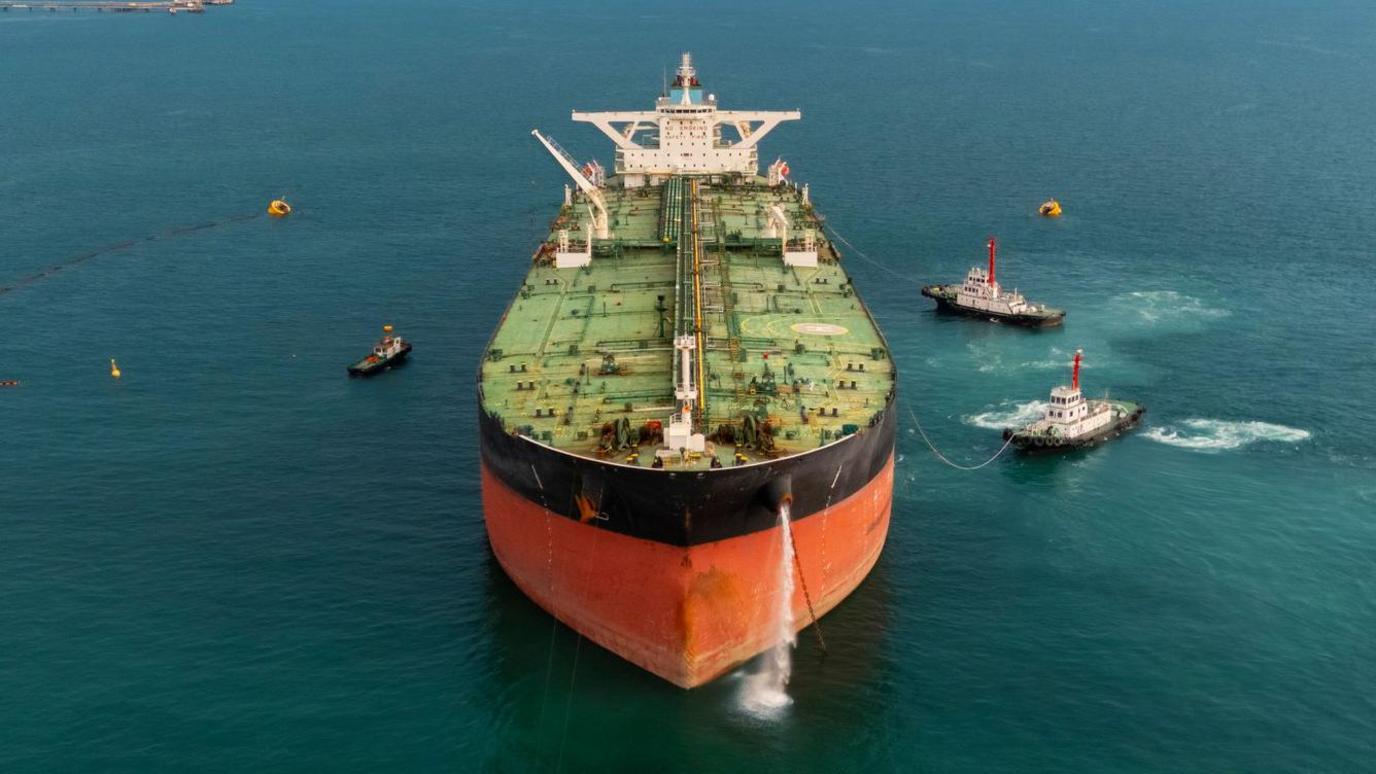Image source, Getty Images
ByAlex Daniel
Business reporter
- Published
3 August 2026
**The threat to ships carrying oil in the Middle East is at its worst since the Iran war started, experts have said, after a spate of attacks on another key route in the region.**
The warning comes after a number of attacks on vessels in the Red Sea, an alternative waterway that some tankers had been using since Iran blocked the Strait of Hormuz.
[Iran has denied Donald Trump's claim](/news/articles/c23579jzv08o) that it was in talks with the US over reopening the strait, but said it was speaking to Oman about securing the shipping lane.
"In terms of threat to the trade of crude, we're at the worst period that we've been in since this since this crisis began," said Matthew Wright, an analyst at ship-tracking firm Kpler.
The number of ships passing through [the Strait of Hormuz](/news/articles/cwymx3eevpjo) was just eight on Sunday and 11 on Saturday, compared with more than 100 per day before the war began, according to Kpler.
Before the conflict, about 20% of the world's oil and gas passed through the strait.
The temporary peace deal with the US struck in early June led to numbers rising again, but the resumption of strikes between the two countries roughly a month later have significantly reduced traffic.
Many ships have been "going dark" when crossing the strait, meaning they turn off their transponder to avoid detection.
For much of the war, some ships carrying oil from Saudi Arabia had instead passed through an alternative shipping lane in the Red Sea, between the kingdom and northeast Africa.
But a recent [spate of attacks by Yemen's Houthi fighters](/news/articles/cvgve0vxy1yo) on Saudi tankers using the alternative waterway has further heightened the risks.
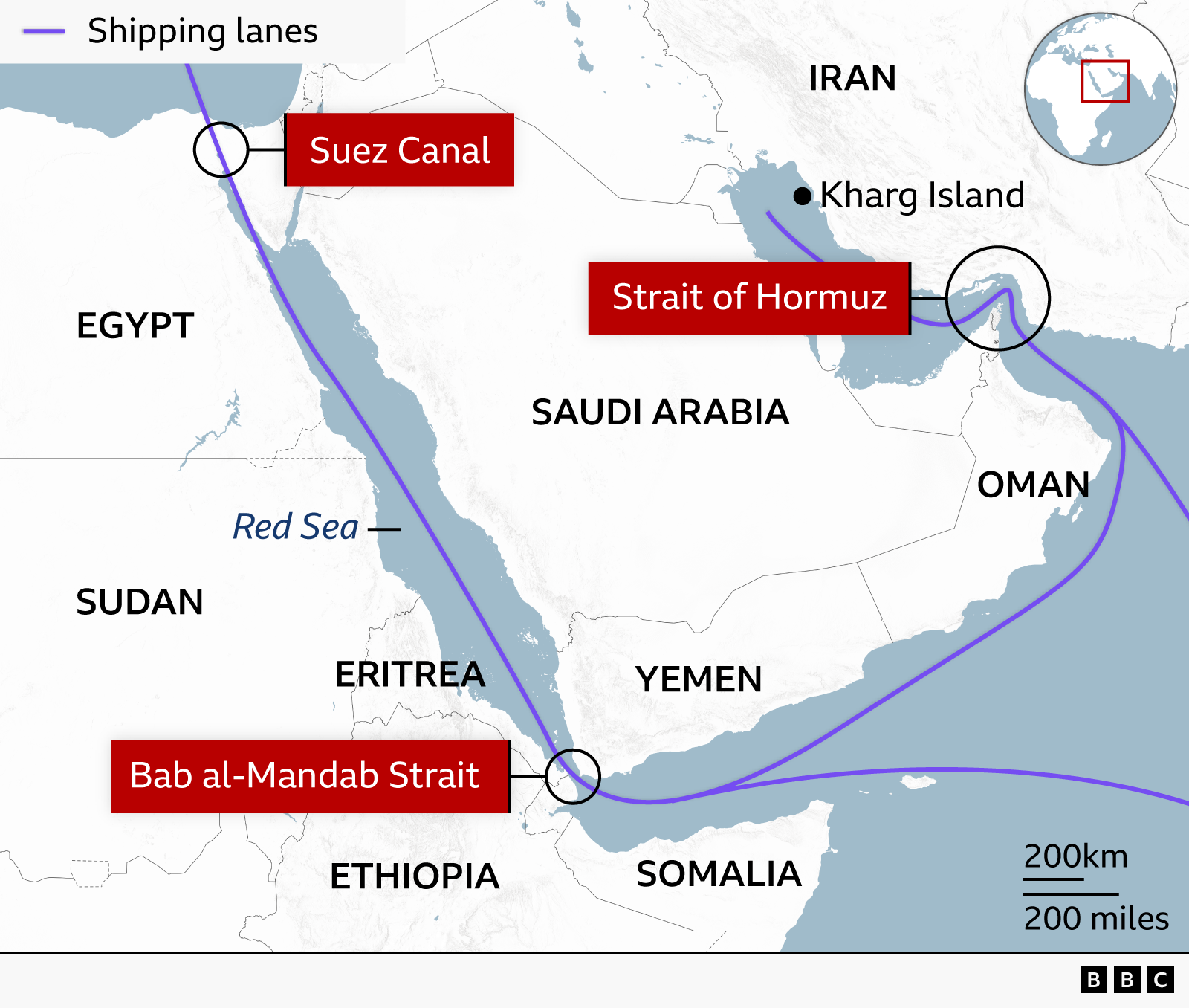
The Iranian-backed Houthi militia announced what it called a blockade on Saudi Arabia's Red Sea ports on 20 July and the UK Maritime Trade Operations agency has reported several attacks on ships in the past week.
"Not only is the ongoing situation in the Strait of Hormuz constraining oil flows, but now a big factor that was helping to balance the market is now also under threat. It's a problem stacked on top of a problem," Wright said.
Tim Wilkins, the managing director of Intertanko, a trade body representing tanker owners, said the industry was "facing a broadening, deteriorating, and increasingly complex security situation".
"We now have the high-risk area going up to Saudi Arabian waters and extending into parts of the Red Sea. So that's having another impact on the market, on freedom of navigation as well."
The number of commodity vessels that passed through the Bab el-Mandeb strait was 28 on Saturday and six of them had their transponders turned off, according to Kpler data, indicating that they were trying to avoid detection.
- [As the US pauses the war with Iran, is Trump really running out of weapons?](/news/articles/c0qvnk2ezp7o)
- Published
27 July
- [Why Iran is risking so much over the Strait of Hormuz](/news/articles/cwymx3eevpjo)
- Published
21 July
- [Tankers make sharp U-turns after Houthi shipping threat](/news/articles/cn0n127lpzgo)
- Published
22 July
Not all vessels are deterred from passing through because the Houthi threat is only targeted at Saudi shipping, with the total number sitting at about 50% of pre-attack levels.
But the number of ships loading crude oil for export to Asia passing through has dropped to about four per day, Kpler added, the lowest point since the start of the war.
A spokesperson for Hapag-Lloyd, the global shipping giant, said some of its vessels were still passing through the Red Sea but that it would "monitor developments closely and will adjust the network if circumstances change".
"If the Strait of Hormuz reopened, most ships could probably leave the region fairly quickly. However, restoring normal cargo flows would take much longer.
"Services have been suspended and ships redeployed elsewhere, so a return to normal flows would most likely take three to four months."
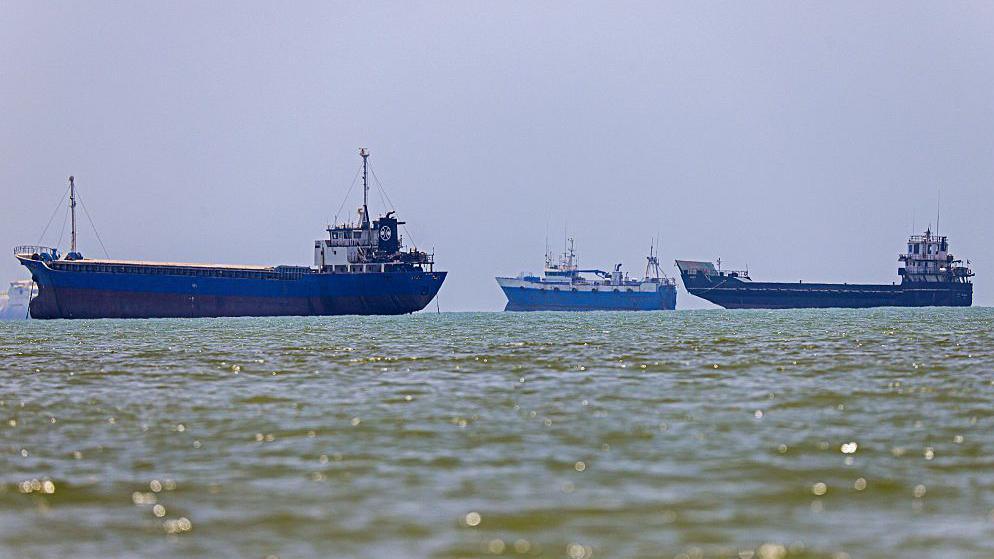Image source, AFP via Getty Images
Despite the talks with Oman, Iran has said that no deal is imminent that would reopen the strait to normal traffic.
Its foreign ministry ministry spokesman Esmaeil Baqaei said any agreement would not lift the current restrictions while US "aggression" continued.
Kpler's Wright said that while talks with Oman could be productive, any deal would need the involvement of the US a