bbc_world
其他
采集 2026-08-05T22:05:48+00:00
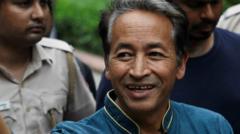
Youth protests have weakened Modi, Indian activist who went on hunger strike tells BBC
来源
bbc_world
发布时间
2026-08-05T18:38:46
采集批次
2026-08-05-22
字数
5309
URL 指纹
55ea59b46520007a
📌 AI 总结(226 字)
教育活动家索南·旺楚克接受BBC采访,评价近期印度青年领导的反腐败教育抗议活动。他本人通过26天绝食抗议推动了这一运动,直接促成教育部长达门德拉·普拉丹辞职。抗议源于考试试卷泄露丑闻,演变为多年来印度最大规模的反政府示威之一。旺楚克认为,青年一代的信心与团结显著提升,对政府构成严峻挑战。他指出,印度失业问题深层次,需改革考试制度与教育方式。他还观察到执政党人民党在近期补选中接连失利,认为民众不满已超越教育领域,警示政府若不回应可能引发更大规模抗议。
📄 正文(5309 字)
Youth can change things, says education activist Sonam Wangchuk

The recent youth-led protests have weakened Indian Prime Minister Narendra Modi "terribly", says leading activist Sonam Wangchuk whose hunger strike galvanised the movement.

Wangchuk told the BBC that the atmosphere in the country had changed following  mass demonstrations which triggered the resignation of the education minister on 25 July.

Young people now have more confidence they can "change things if they want to" and feel they don't have to "take everything lying down", the 59-year-old said.

The "cockroach" movement mounted one of the biggest public displays of dissent against Modi's government, which has been in power since 2014.

The movement takes its name from a remark by India's chief justice, who drew criticism after comparing sections of unemployed young people to "cockroaches" during a court hearing.

Wangchuk fasted in scorching heat in the capital, Delhi, for 26 days in June and July, consuming only salt and water. He says he has now regained six of the 11kg he lost.

The activist was forcibly taken to hospitals which he says were "more like prisons" for the final six days of his fast.

By then, the protests had escalated from public anger about the leak of exam papers into some of the biggest anti-government demonstrations India had seen in years.

Education Minister Dharmendra Pradhan resigned the day after Wangchuk ended his hunger strike.

Since then,Modi has announced fast-track courts to try those accused in the leaksand appointed a tech billionaire to lead efforts to reform the examination system.

The government also said it would offer compensation to families of students who took their own lives after exam questions were leaked.

But India's problems are deeper - with graduate unemployment hovering around 35-40% for the past 25 years.

There were big demonstrations after Sonam Wangchuk was forcibly removed from the protest site to hospital

Wangchuk argues fundamental reform to education is needed.

The engineer and education specialist says exams currently have little relevance to the job market.

Often based on multiple-choice questions, they are designed to assess millions of students efficiently, with no consideration of how effectively they measure skills and understanding, he says. This, in turn, shapes how schools teach.

If exams placed greater emphasis on hands-on experience and aptitude, he suggests, schools might adapt their methods and help address India's jobs crisis.

"There needs to be some planning of what the world and the country are likely to look like in 15 years," Wangchuk says.

Changing the way children are taught might help ensure they are "not left unemployed and sectors that need people are not left underemployed".

India's government has previously defended itself against criticism of its handling of the economy. It argues that claims of an unemployment crisis are overstated and that its macroeconomic policy remains fundamentally robust.

Why are thousands protesting for education reform in India?

The hunger-striking engineer demanding education reforms in India

Meanwhile, reports say many Cockroach Janta Party protesters are still facing  repercussions including court cases, police harassment and social media abuse.

This is happening despitethe Supreme Court directing authorities not to take coercive actionagainst those protesters who are facing charges but have no prior criminal record.

But regardless of that, Wangchuk says that, "in the last few days, I think there has been good progress".

The engineer has a history of campaigning for more self-rule in Ladakh

Wangchuk insists change is in the air in India.

He believes the government has been hugely damaged by how long it took before Pradhan stepped down.

"This gave young people a chance to gain confidence and unity in their actions."

Wangchuk says that, if the government doesn't listen to the people, they may return to protests that go beyond education.

He suggests the damage is already being felt by the governing BJP, pointing to the party losing two of three by-elections this week - including aseat in Bihar state it had held for more than 30 years.

However, he maintains that India's leaders could still change their approach.

"I always believe in people realising their mistakes and amending their ways. So I would give them that chance."

Twelve days have now passed since Wangchuk said he broke his fast. He is back in Leh, his hometown in the Himalayan region of Ladakh.

He has a renewed faith in the power of hunger strikes - taking inspiration from Mahatma Gandhi's philosophy of non-violent resistance.

In previous years he's held hunger strikes for more self-rule in Ladakh and against a "very powerful government" seeking to "bulldoze ecologically sensitive places".

Though he has not achieved his goals there, he says "inflicting pain on ourselves makes the government feel differently, compared to us using sticks and stones".

Asked if he has any plans to run for office, he says no - he would rather enable others to do so.

'I was slut-shamed' - Indian women 'cockroach' protesters doxxed and abused

Why India's youth anger has become Modi's biggest challenge

'What was my fault?': How India's exam paper leak ended young lives